A whole house is overwhelming. A garage full of decades of hobbies, projects, and “I might need that someday” items is even worse.
A kitchen table has edges, and limits bring relief. Your parent can see progress quickly, feel in control, and stay engaged.
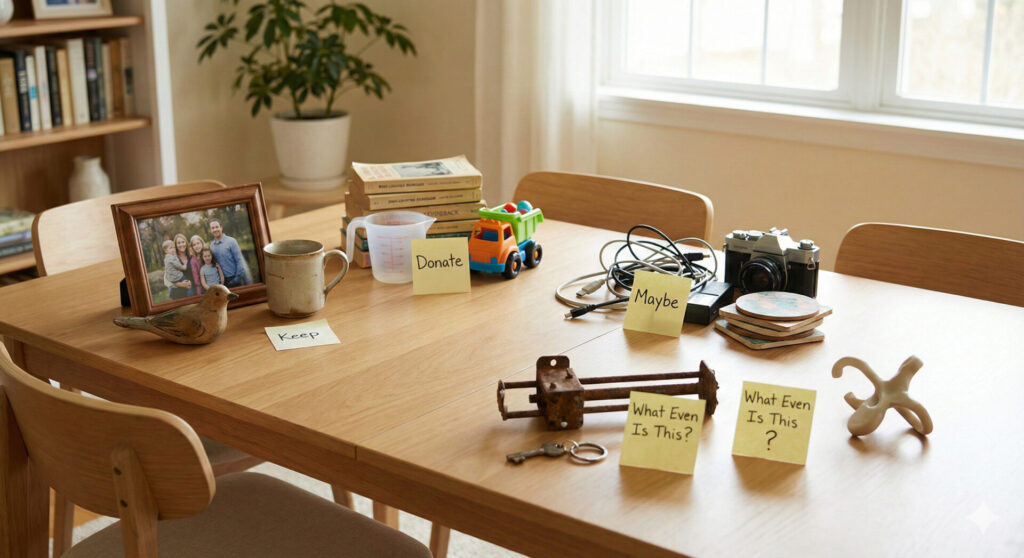
The messy table is not a failure. It is the doorway into everything that follows.
The items on the table are unmarked and jumbled, but the post-it notes show that this chaos has a plan. Later, these items will be organized into piles or boxes. The real system—the Five-Box Sorting System—comes next, but the table is the safe place to begin.
Make the sorting process easier with Worksheet 2: Spotting the Real Treasures, available on the Worksheets page. It walks you through exactly how to identify meaningful items without getting overwhelmed.
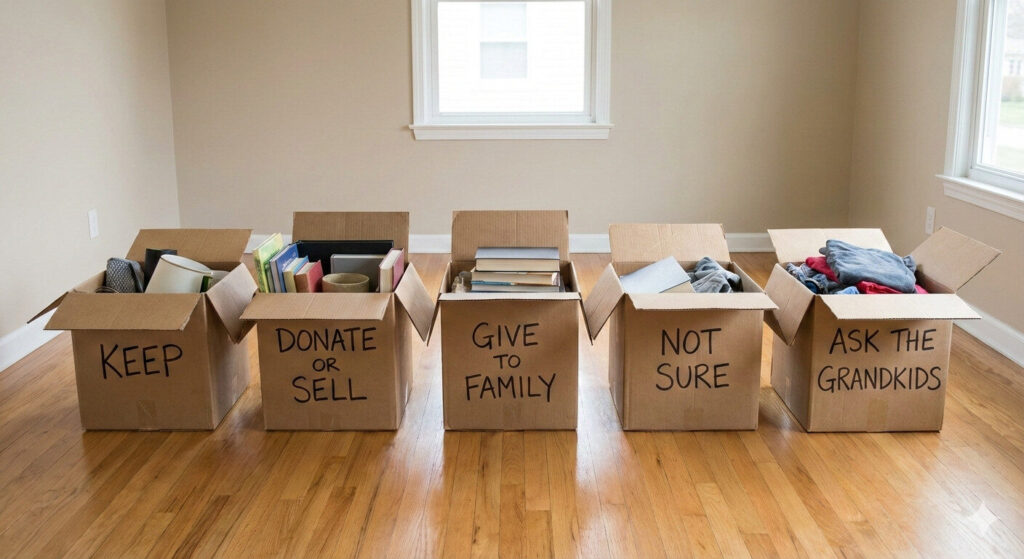
Once momentum begins at the kitchen table, you can gently guide the items into five categories:
1. Keep
Daily-use items or meaningful objects with stories attached.
Items your parent uses daily or holds dear. These are objects that bring comfort, routine, or cherished memories. Tip: Encourage storytelling about a few favorite items, it honors the memory without slowing the process.
2. Donate or Sell
Items your parent doesn’t need, but that others could use.
Items your parent no longer needs but could benefit someone else. This is the box that turns clutter into generosity or value. Tip: Keep a small basket or bin for this so items don’t linger on the table.
3. Give to Family
Heirlooms, sentimental pieces, or tools that belong elsewhere.
Objects that have meaning for siblings, nieces, nephews, or other relatives. This helps preserve family history while sharing responsibility. Tip: Let your parent add a short note or story to each item. It makes the handoff personal.
4. Ask the Grandkids
A fun way to involve younger family members and preserve memories.
Toys, books, or simple keepsakes can be sorted with their input, creating connection across generations. Tip: Video calls work if grandchildren live far away, keep it lighthearted and stress-free.
5. Not Sure Yet
The most important box. Reduces stress and keeps the session moving without arguments.
This is for items that spark debate or emotion. Putting something here reduces stress and keeps the session moving. Tip: Revisit this box later when the family has had time to reflect; sometimes distance makes decisions easier